About
Learn on this page about the entire life cycle of a long term scientific research site and the various ways it has had a positive impact.

Site Timeline
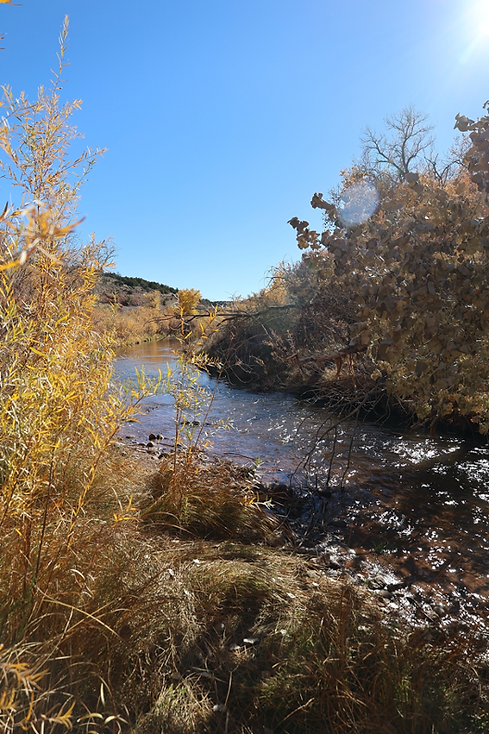
The Rio Calaveras site got its start in 1992. It was selected as part of a 3 stream research project lead by Cliff Dahm and a few other colleagues. The project studied how the hydrology of streams varies in different geologic conditions. From then on, more people became interested in the site due to the well understood hydrology and geology of the site. Over the next 14 years the general hydrology and bio-geo-chemistry of the stream were thoroughly studied. The long term nature of the site allowed researchers to study long term variations in these study areas due to seasonal snowpack differences and climate differences (El Niño/ La Niña cycle). Nearly 20 years after the research on the site ended, the Forest Service has requested the site to be cleaned up. There is a cleanup project scheduled for Spring 2024 that will put this site out of commission permanently. Key factors that made the site so successful were: 1) The ability of the lead researchers to acquire funding (mainly from the National Science Foundation) to supply the site with infrastructure (over 300 groundwater wells, flumes for discharge, and multilevel samplers) 2) A group of scientists and students that were interested in topics that could be studied. 3) Having a team that works well together and enjoys doing the work.
Research and Applications
-
Career Development: The Rio Calaveras site was a significant part of the careers of several professors and students. All of which have gone on to have very successful careers in science or natural resource management.
-
Water Resource Management: The site studied the hydrology of the hyporheic zone. The hyporheic zone is the region just below the stream bed where groundwater – surface water exchange occurs. Understanding how much and where water will transfer between the surface and the ground is key in making decisions to where and how much water should be used, especially in the Southwest.
-
Water Quality: Studies at the site explored the movement of chemical constituents through the hyporheic zone. This is key to understanding where pollutants and other materials will travel to based on hydrologic conditions.
-
Scientific Community: The work done at this site has been used as a basis for future research thousands of times. People all around the world have applied the findings of this research to larger river systems.